
Reviewed · SAN FRANCISCO HISTORY TOURS
San Francisco Technology and History Tour: South of Market
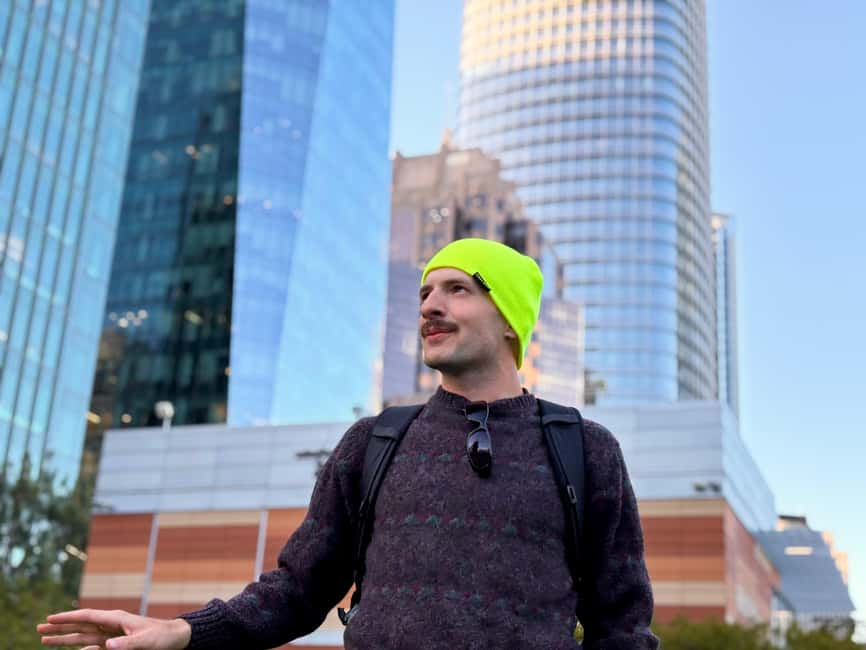
SoMa’s story is not a straight line from warehouses to software. On this 70-minute walk, you’ll pass places shaped by a gold-rush encampment, shipping docks, urban renewal and today’s tech economy. I like that the route makes those changes visible on the street, and that guide Wes brings both local history and firsthand startup experience to the conversation.
I also like the practical route: South of Market is San Francisco’s flattest neighborhood, and the tour is wheelchair-accessible. One consideration is the short schedule. With several eras and stops packed into just over an hour, you’ll get a brisk introduction rather than time to linger at each site.
At a glance
- South Park has worn many hats: It began as a garden-square development and later housed communities ranging from earthquake refugees to tech companies.
- Second Street links port and startup stories: Its past as a shipping corridor sits alongside present-day offices for LinkedIn, DoorDash and Anthropic.
- Yerba Buena Gardens marks a contentious change: The tour discusses the urban renewal project and the people displaced from the area.
- Salesforce Park is the rooftop finish: Take in views of the skyline and Bay from a large garden above the Salesforce Transit Center.
- Wes connects history with current tech: He lives and works in the neighborhood and works with startups.
- The route is short and mostly flat: Expect about 70 minutes on foot, with brief stops along the way.
South Park, a neighborhood with several past lives
The tour begins in South Park, where you’ll spend about 10 to 15 minutes before heading north. It is one of San Francisco’s oldest neighborhoods, laid out in the 1850s in the style of a British garden square. The park’s seating and shade make it a comfortable place to start, and its central green gives the guide a useful setting for explaining how the surrounding blocks changed.
South Park is also an unusually clear case study in the city’s shifting fortunes. It has been associated with a gold-rush encampment, a Gilded Age luxury development, a refugee camp after the 1906 earthquake, San Francisco’s Japanese community, and an industrial district. In the 2010s, it became a home for early offices of Instagram and Twitter, and today it sits within the orbit of the city’s venture capital and startup world.
That succession is the point. The park is not simply a pretty pause before a tech tour. It helps you see how one small place can reflect several of San Francisco’s major turns, including disaster, migration, industry and investment. Wes’s perspective is particularly relevant here: he lives and works in the neighborhood and works with startups, so the modern tech chapter is part of the setting he knows firsthand.
The route is not built around a long stop at each historical site. Instead, you’ll get a compact introduction and then read the neighborhood as you walk. If you want a slower visit to South Park itself, arrive early or return afterward; the tour allows a short pause, not an extended park visit.
More history tours in San Francisco:
- Chinatown & North BeachLittle Italy: 7 Tastings & History
★ 5.0 · 1,070 reviews - North Beach & Little Italy Walking Tour: Food, History & Flavor
★ 5.0 · 1,044 reviews - Chinatown Walking Tour: Food, History & Flavor
★ 5.0 · 575 reviews
Second Street, from steamship docks to software offices
From South Park, the group walks north along Second Street. The route is mostly flat, a welcome detail in a city known for steep hills. Second Street once connected downtown with the Pacific Mail Steamship Company’s docks, making it an important link between the city and maritime trade.
The street also tells a story of how San Francisco made room for commerce. A large land-reclamation project flattened one of the city’s biggest hills to create the thoroughfare. That is a striking piece of urban engineering, and it changes how you look at the broad, built-up corridor around you: the street itself represents a deliberate reshaping of the land.
Now the same corridor hosts offices for LinkedIn, DoorDash and Anthropic. The contrast is not just old buildings versus new companies. It is a change in what drives the district, from port access and industry to technology and finance. The tour’s focus on the future path of California High Speed Rail adds another layer, connecting the neighborhood’s infrastructure history with plans for what may come next.
Wes’s mix of local and startup experience should suit anyone who wants more than a list of company names. You can ask how the tech industry fits into the neighborhood’s longer story, while still keeping the focus on the streets and buildings around you. The short walking segment means the discussion will move along with the group, so this is a good place to listen closely rather than expect a long stop outside each office.
The tour also includes Folsom Street, noted for its gay history. That gives the walk a social-history thread beyond its main port, tech and development themes. The available route details do not specify a separate extended stop there, so think of it as part of the wider neighborhood story rather than a stand-alone visit.
Yerba Buena Gardens, and the costs of renewal
About halfway through, the tour reaches Yerba Buena Gardens for a guided visit of roughly 15 minutes. The gardens occupy the site of one of San Francisco’s largest urban renewal projects. Here, the guide discusses who lived in the area and how their eviction affected the city’s political climate.
That context is valuable because a polished public space can make the process that created it easy to overlook. The tour asks you to consider not only what was built, but also who had to leave and what those displacements meant for San Francisco. It makes the stop more than a garden break and helps connect development decisions to the lives of the people who experienced them.
The visit is brief, so you should not expect a long exploration of every part of the gardens. Instead, you’ll get a focused account of the site’s role in urban renewal and its consequences. If this subject interests you, the stop is likely to be one of the most thought-provoking parts of the walk.
The tour’s format also gives the story a useful physical setting: you are standing in the very area being discussed. Historical photographs used during the walk help compare earlier views of the neighborhood with what is there now. That kind of visual comparison can make a changing city easier to understand than dates and names alone.
Salesforce Park, a rooftop view with a complicated past
The walk ends at Salesforce Park, the large rooftop garden built above the Salesforce Transit Center. From here, you’ll get a view of the downtown skyline and the Bay. The park is the tour’s most obvious example of the tech industry’s imprint on present-day San Francisco, and the Salesforce project is the city’s largest development in recent history.
The site’s past complicates that modern image. It was built over a beachfront natural gas refinery and was once part of Tar Flat, described as the city’s poorest neighborhood. The contrast between that history and the scale of the new development gives the final stop a useful edge: the tour does not present growth as a simple success story.
There is also a chance to see Klockar’s blacksmith, a reminder of the area’s early connection to metalworking. It provides a smaller, more tangible link to the district’s industrial past before you finish among the city’s newest public spaces. The sequence from blacksmithing and port commerce to a roof garden over a major transit project neatly sums up the tour’s central theme: SoMa keeps changing, but each new chapter sits on top of the old one.
The finish is practical as well as scenic. Salesforce Park is near Market Street, and the end point gives you easy access to BART and MUNI. The Powell Street cable car is about a 15-minute walk away. You can use the finish to continue exploring downtown or head back across the city without retracing the tour.
More market visits in San Francisco:
- San Francisco Food Tour: Ferry Building and Ferry Plaza Farmers Market
★ 4.5 · 92 reviews
What Wes adds to the walk
The guide matters on a tour built around connections between past and present. Wes is described as living and working in the neighborhood, and he works with startups. That combination gives him a useful vantage point for explaining both SoMa’s earlier development and the current tech scene.
His style is a particular strength. He is described as entertaining and personable, with a knack for bringing history, urban development and personal anecdotes together. The most praised elements are his command of the area, his enthusiasm for its layered history, and his ability to explain the local tech ecosystem from the inside. That should make the tour especially appealing if you are curious about how the startup world operates in the place where it has taken root.
Historical photographs are another practical aid. Comparing past images with what you see along the route helps make the changes legible, especially in a neighborhood where redevelopment can erase older traces. The images also give the guide a way to show how much the streets have shifted over time.
The tour has received a perfect rating from a small number of recent participants, including locals who said they learned things they had not known about SoMa. That is encouraging, but a short tour can only cover so much. If you already know the area, the insider perspective and visual comparisons may be the main draw; if you are new to San Francisco, the route gives you a compact frame for understanding a neighborhood you might otherwise pass through without much context.
Is $30 a fair price for 70 minutes?
At $30 per person, this is a modestly priced guided introduction to a part of San Francisco that is easy to misread. You are paying for a guide who ties together the district’s port, industrial, social and tech histories, rather than simply walking between landmarks. Wes’s connection to both the neighborhood and startups adds value if you want to understand how the current tech economy relates to the city around it.
The main trade-off is time. The tour covers South Park, Second Street, Folsom Street, Yerba Buena Gardens and Salesforce Park in about 70 minutes. That pace works well for orientation and a strong overview, but it does not leave much room for a deep visit at each stop or long independent exploration.
There are no obligatory extra fees. The tour is offered in English, and private groups are available. You can cancel up to 24 hours in advance for a full refund, and the reserve-now, pay-later option lets you hold a spot without paying immediately.
Who should book this SoMa walk?
I’d choose this tour if you are interested in how San Francisco’s tech identity grew out of earlier waves of trade, industry and development. It is also a good fit for locals who want a fresh way to read familiar streets, particularly if you have been curious about the history behind South Park, Yerba Buena and the Salesforce project.
It may be less satisfying if you want a long, leisurely garden visit or a tour focused only on classic visitor sights. The route is a brisk walk through a changing downtown district, with the guide’s interpretation doing much of the work. Wear comfortable shoes and clothes, and be ready to keep moving between stops.
The neighborhood is the city’s flattest, and the tour is wheelchair-accessible. Still, the experience involves walking throughout, so consider your own comfort with a 70-minute outing. Meeting points may vary depending on the option you book, so check the selected option before setting out.
FAQ
How long is the tour?
The walking tour lasts about 70 minutes.
How much does the tour cost?
The listed price is $30 per person.
Where does the tour begin?
It begins in South Park. The meeting point may vary depending on the option booked.
Where does the tour finish?
It finishes at Salesforce Park, near Salesforce Tower and Market Street.
Is the tour wheelchair-accessible?
Yes. The tour is wheelchair-accessible, and South of Market is described as San Francisco’s flattest neighborhood.
What language is the tour in?
The live tour guide speaks English.
Is this a private tour?
Private groups are available.
What should I wear or bring?
Bring comfortable shoes and wear comfortable clothes.
Are there extra fees?
There are no obligatory additional fees.
Can I cancel or reserve without paying right away?
You can cancel up to 24 hours in advance for a full refund. A reserve-now, pay-later option is also available.
Just listed in San Francisco
- 90-Minute Sunset Tour Aboard Wine Therapy★ 5.0 · 18 reviews
- San Francisco Bike Rental★ 4.0 · 31 reviews
- San Francisco Indoor Skydiving with 2 Flights & Personalized Certificate★ 5.0 · 11 reviews
- 30-40 Minute Airplane San Francisco Bay Flight Tour★ 4.5 · 17 reviews
- 90 Minute Daytime Tour Aboard Wine Therapy★ 5.0 · 13 reviews
- San Francisco Bay Cruise, Muir Woods and Sausalito Combo Tour★ 5.0 · 4 reviews
- San Francisco Alcatraz App Guided Tour with Cruise and Jail House★ 4.0 · 18 reviews
- All Day Special GoCar Tour in San Francisco★ 5.0 · 34 reviews
San Francisco History Tours, compared.
Chinatown & North BeachLittle Italy: 7 Tastings & History
Read our review →
North Beach & Little Italy Walking Tour: Food, History & Flavor
Read our review →

#1 Sonoma Walking Food, Wine Tasting & History Tour (Public Tour)
Read our review →
San Francisco Whiskey Cocktail Class: Views and City History
Read our review →
Chinatown Food & History Walking Tour – Small Group
Read our review →
North Beach Food & History Walking Tour – Small Group
Read our review →Browse the lists this tour appears in