
Reviewed · SAN FRANCISCO WALKING TOURS
San Francisco: Castro & LGBTQ Private Walking Tour
The Castro’s story is written into its streets: Harvey Milk Plaza, the site of Milk’s former camera shop, and the Castro Theatre all help explain why this neighborhood became a center of LGBTQ life and activism. I like that this is a private, customizable walk, and that it links landmarks to the people and events behind them. The main consideration is guide expertise: a warm, personable guide may not always bring the same depth of Castro and LGBTQ history.
I also like the chance to ask questions and get advice tailored to your interests, rather than follow a fixed group script. But two hours is a short window for a subject this broad, and the experience depends heavily on the guide’s preparation. If detailed history is your priority, confirm what the guide can cover before you book.
- Harvey Milk Plaza gives the tour a clear starting point, with a direct connection to a major civil rights figure.
- Milk’s former residence and camera shop tie the neighborhood’s history to specific places in the Castro.
- The Castro Theatre adds an architectural and cultural stop, with the rainbow flag as a visible symbol of LGBTQ pride.
- Private format means the walk is exclusive to your group and can be adjusted around your interests.
- Two hours on foot suits a focused introduction, not a full account of San Francisco’s LGBTQ history.
- Guide depth can vary, so ask about the history and stories you most want to hear.
A two-hour walk through the Castro’s story
The Castro is more than a collection of landmarks. It is a neighborhood associated with LGBTQ community, activism, and the struggle for civil rights. This tour sets out to make those connections visible as you walk, instead of leaving you to piece them together from plaques and storefronts on your own.
You meet your guide in front of The Hotel Castro and explore the area on foot. The planned stops include Harvey Milk Plaza, Milk’s former home and camera shop, and the Castro Theatre. Along the way, your guide can discuss the neighborhood’s change into a sanctuary for LGBTQ people, the origins of the rainbow flag, and the community’s experience during the AIDS epidemic.
That is a useful range for a short tour. It moves from a public memorial to places connected with Milk, then widens out to symbols and events that shaped the community. The value lies in hearing how the stops fit together, not simply ticking off addresses.
Still, the subject is too large for two hours to cover everything. Think of this as a guided introduction to the Castro, not a complete history of LGBTQ San Francisco. If you want to spend more time on activism, the AIDS epidemic, architecture, or the neighborhood today, ask your guide to focus the route accordingly.
Harvey Milk Plaza sets the tone
Harvey Milk Plaza is the natural place to begin. It honors Milk, a civil rights figure whose life and activism are closely tied to the Castro. Starting here gives you a human point of entry before the tour moves to other places associated with him.
A good guide can make a plaza more than a photo stop by explaining why Milk’s work mattered and how the neighborhood became a place where LGBTQ people could build community. That context helps you understand why the Castro is so closely linked to the wider history of gay rights activism.
The tour also visits Milk’s former residence and camera shop, described as a key site in that history. These stops make the story more tangible: you are seeing actual places connected with a person, rather than hearing a general account with no local anchor. The camera shop is particularly important to the route, so it is worth asking your guide to point it out clearly and explain its role.
That last point matters. The physical details can be easy to miss if you are not sure what you are looking at. A past visitor was standing by the shop while trying to locate it, which is a reminder to ask direct questions if a stop is unclear. A private walk gives you room to do that without holding up a larger group.
More walking tours in San Francisco:
- North Beach & Little Italy Walking Tour: Food, History & Flavor
★ 5.0 · 1,044 reviews - San Francisco Chinatown Walking Tour
★ 5.0 · 778 reviews - San Francisco LGBTQ Walking Tour with Local Guide
★ 5.0 · 600 reviews
The Castro Theatre and the rainbow flag
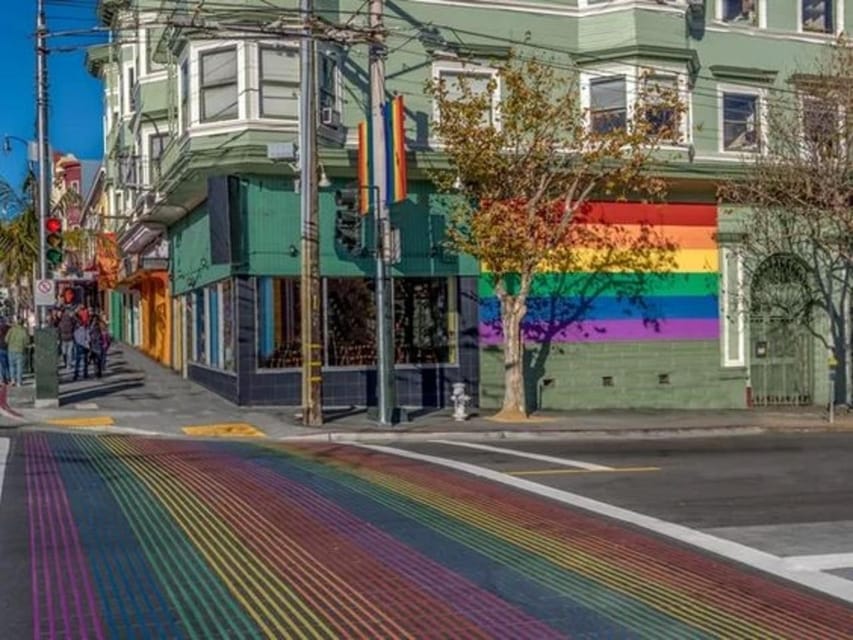
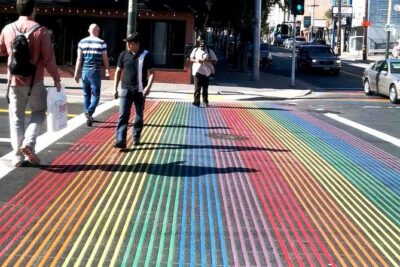
The historic Castro Theatre is another planned stop. Its place on the route adds an architectural and cultural landmark to a tour focused on community history. The rainbow flag flies here as a sign of unity and diversity, and your guide can explain how the flag came to represent LGBTQ pride around the world.
The flag is a familiar symbol, but a local explanation can add meaning to something you may otherwise recognize only at a glance. The tour’s broader aim is to connect symbols and buildings with the people and events behind them. If you are especially interested in the flag’s origins, ask for that story rather than assuming the guide will cover it in detail without prompting.
The theatre also helps give the walk a change of pace. After stops tied directly to Harvey Milk, it broadens the focus to the Castro as a neighborhood with its own cultural identity. The information provided does not promise entry to the theatre, so treat it as an exterior stop unless your guide confirms otherwise. Admission to monuments, museums, and other attractions is not included.
What the tour can tell you about the AIDS epidemic
The walk includes discussion of the Castro’s role during the AIDS epidemic. That subject is essential to understanding the neighborhood’s recent history and the challenges faced by its community. It also gives the tour an opportunity to move beyond celebratory symbols and address loss and hardship.
A two-hour route can introduce this history, but it cannot cover every aspect in depth. If this is a central reason for booking, tell your guide at the start. A private format is most useful when you use it to shape the conversation, rather than simply follow the default route.
The same goes for other interests. You might want to focus on Harvey Milk, the origins of LGBTQ activism in San Francisco, neighborhood architecture, or contemporary Castro life. Customization lets you tell the guide what matters most, though it does not guarantee that every topic can be covered in detail within the time available.
Private means personal, but preparation still counts
The main practical advantage is that the tour is private: there will be no one outside your group. That gives you more freedom to ask questions, adjust the emphasis, and set a pace that works for your party. The guide is also meant to offer advice about other things to do in San Francisco, which can be useful if this is early in your visit.
Past experiences suggest that the personal element can be a real strength. One guide was described as friendly, attentive, flexible, and able to offer personal insights into history and architecture. Another was praised for bringing energy to the subject. Those are qualities that can make a neighborhood walk feel like a conversation rather than a lecture.
But friendliness and expertise are not the same thing. A past guide named Chet was described as pleasant and engaging, and as having a broad grasp of San Francisco, yet the tour was criticized for limited knowledge of the Castro and LGBTQ history. That contrast is worth keeping in mind: this experience’s subject is specific, so you want a guide prepared to explain more than where nightlife happens.
I would ask before the walk how much the guide plans to cover about Harvey Milk, the rainbow flag, and the AIDS epidemic. You can also say plainly if you want historical detail rather than a casual orientation. That small conversation may help align the tour with what you are paying for.
A few more San Francisco tours worth a look
- Castro District LGBTQ+ Historic Tour
★ 5.0 · 9 reviews - San Francisco: Castro District LGBTQ+ History Tour
★ 5.0 · 9 reviews
Is $100 per person good value?
At $100 per person, this is not a low-cost way to see the Castro. The price is easier to justify if you value a private guide, a route adapted to your interests, and a chance to ask questions as you go. For a couple or small group with a strong interest in LGBTQ history, those features can make a focused two-hour walk worthwhile.
The price is harder to justify if you mainly want to stroll through the neighborhood or see its main landmarks from the outside. The tour does not include food, drinks, museum or monument admission, attraction tickets, or car transportation around the city. You are paying primarily for the guide’s time and interpretation.
The private arrangement also means the value changes with group size. The stated price is per person, so compare the total cost for your party with what you would pay for a group tour or an independent walk. If you are traveling alone, the same per-person price buys a one-on-one experience; if you are with several people, the cost may feel more reasonable for a private outing.
The key question is not simply whether the Castro is worth seeing. It is whether you want someone to explain its history and help you connect the sites. If so, ask about the guide’s relevant experience before booking. If you prefer to explore at your own pace, you may get enough from a self-guided walk.
Timing, walking, and practical details
The tour lasts two hours, with starting times available according to availability. Wear comfortable walking shoes and plan for a neighborhood walk rather than a vehicle tour. The information says the experience is a walking tour and refers to public transport as part of the arrangement, while also stating that local transportation around the city and car transportation are not included. If you need transport beyond the walk, clarify that before booking.
The meeting point is in front of The Hotel Castro. The tour is listed as wheelchair accessible, a useful detail if access is a concern, but you should still confirm any specific needs with the provider when arranging your visit.
Guides are available in English, French, Italian, and Spanish. The tour is for a private group, and the booking terms allow free cancellation up to 24 hours in advance. You can also reserve now and pay later. These options offer flexibility, but the most important planning step is to make sure the guide’s language and historical focus fit your group.
Who will get the most from this walk?
I would consider this tour if you want a personal introduction to the Castro and care about the people and events behind its landmarks. It is a natural fit for visitors with an interest in LGBTQ history, civil rights, Harvey Milk, or San Francisco neighborhoods, especially if they enjoy asking questions and shaping a conversation as they go.
It may also suit you if you want a local guide to help you get oriented and suggest other things to do in the city. The private format leaves room for those practical questions, and the route includes several well-known Castro sites in a compact period.
I would hesitate if you expect a detailed academic account without first checking the guide’s background. The experience can be warm and engaging, but the depth of historical knowledge may not be consistent. A private tour is only as strong as the person leading it, so be specific about your expectations before you commit.
Should you book the Castro walking tour?
Book if you want a private, flexible walk that connects Harvey Milk Plaza, Milk’s former home and camera shop, and the Castro Theatre with the neighborhood’s LGBTQ history. Before paying $100 per person, ask how the guide handles the AIDS epidemic, the rainbow flag’s origins, and Harvey Milk’s activism. If the answers are specific and match your interests, the tour can offer a useful, personal introduction. If you mainly want a reliable history lesson, verify the guide’s expertise first or consider exploring on your own.
FAQ
How long is the Castro and LGBTQ private walking tour?
The tour lasts two hours.
How much does the tour cost?
The listed price is $100 per person.
Where do I meet the guide?
Meet your guide in front of The Hotel Castro.
Which places are included on the route?
The route includes Harvey Milk Plaza, Harvey Milk’s former residence and camera shop, and the historic Castro Theatre.
Is the tour private?
Yes. It is a private group tour, with no one outside your group.
Can I customize the walk?
Yes. The tour can be customized, so you can tell the guide which subjects interest you.
Which languages are available?
Guides are listed as available in English, French, Italian, and Spanish.
Are food, attraction tickets, or museum admission included?
No. Food, drinks, attraction tickets, and entry to monuments and museums are not included.
Is the tour wheelchair accessible, and can I cancel?
The tour is listed as wheelchair accessible. You can cancel up to 24 hours in advance for a full refund.
Just listed in San Francisco
- 90-Minute Sunset Tour Aboard Wine Therapy★ 5.0 · 18 reviews
- San Francisco Bike Rental★ 4.0 · 31 reviews
- San Francisco Indoor Skydiving with 2 Flights & Personalized Certificate★ 5.0 · 11 reviews
- 30-40 Minute Airplane San Francisco Bay Flight Tour★ 4.5 · 17 reviews
- San Francisco Alcatraz App Guided Tour with Cruise and Jail House★ 4.0 · 18 reviews
- 90 Minute Daytime Tour Aboard Wine Therapy★ 5.0 · 13 reviews
- San Francisco Bay Cruise, Muir Woods and Sausalito Combo Tour★ 5.0 · 4 reviews
- All Day Special GoCar Tour in San Francisco★ 5.0 · 34 reviews
San Francisco Walking Tours, compared.
North Beach & Little Italy Walking Tour: Food, History & Flavor
Read our review →
San Francisco LGBTQ Walking Tour with Local Guide
Read our review →

#1 Sonoma Walking Food, Wine Tasting & History Tour (Public Tour)
Read our review →
Healdsburg Small-Group Food and Wine Walking Tour
Read our review →
Healdsburg Wine and Food Pairing Guided Walking Tour
Read our review →
Browse the lists this tour appears in